


Table of contents
No headings found in this article.
If you live where winters freeze ponds solid, you’ve probably asked yourself — Will my fish make it through the winter?
Good news: many species can. The trick is knowing which fish can withstand the cold and how to provide them with the conditions they need to survive it.
Small ponds freeze fast, and that can spell trouble if you’re not prepared. Here’s everything you need to know about small pond fish that survive winter, plus how to keep them healthy until spring.
How Cold Affects Pond Fish
Fish are cold-blooded, so their body temperature follows the water around them. As the pond cools, their metabolism slows way down. They move less, eat less, and settle near the bottom where the water is slightly warmer.
When the pond ices over, the biggest risks are:
-
Low oxygen: Ice seals the surface, cutting off gas exchange.
-
Toxic gases: Decaying leaves and waste under the ice release harmful gases.
-
Freezing depth: In small ponds, the entire water column can freeze solid.
That’s why aeration and pond de-icers are lifesavers. They keep a small area open for oxygen and prevent total freeze-over.
Check out Winter Aeration Systems and Pond De-Icers built for small backyard ponds.
Best Fish for Cold Ponds
Let’s look at the best fish for cold ponds—the ones that can handle a Midwest or northern winter without needing a rescue mission every fall.

Goldfish*
1. Goldfish
Can goldfish survive winter in outdoor ponds?
Yes—goldfish are one of the toughest small pond fish out there. They slow down in cold water and rest quietly near the bottom until spring.
Why they’re great:
-
Extremely hardy and tolerant of low temperatures.
-
Come in many varieties: Comet, Shubunkin, and Common Goldfish do best outdoors.
-
Gold fish can grow to 6-8in long in garden ponds and they will reproduce, so look forward to many babies.
- The downside of many, many babies is the increase in biomass - cull your goldfish population annually to maintain a proper population size in your pond.
- The downside of many, many babies is the increase in biomass - cull your goldfish population annually to maintain a proper population size in your pond.
-
Easy to feed and maintain.
Winter care tips:
-
Stop feeding when water temps drop below 50°F.
-
Make sure the pond is at least 18–24 inches deep.
-
Use an aerator or de-icer to keep a hole open in the ice.
Goldfish don’t need heaters, just stable, oxygen-rich water.
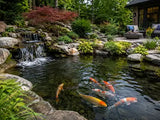
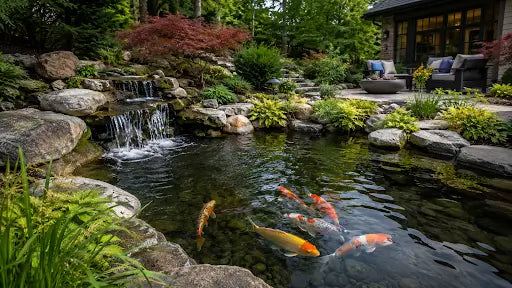
2. Koi
Do koi survive freezing ponds?
They can, if you help them out. Koi are bigger and less tolerant of oxygen dips than goldfish, but they’ll overwinter just fine in deeper ponds.
Why they’re great:
-
Cold-hardy once mature.
-
Add color, movement, and personality to your pond.
-
It can live for decades if properly cared for.
Winter care tips:
-
Maintain a pond depth of at least 3 feet for koi.
-
Maintain aeration all winter to prevent oxygen loss.
-
Don’t feed below 50°F; undigested food can rot in their gut.
DO NOT break pond ice with a hammer. The shock can kill koi. Use a de-icer instead.
3. Rosy Red Minnows
These tiny fish are winter warriors. Rosy Reds are a color variant of the Fathead Minnow—native to North America and built for cold water.
Why they’re great:
-
Survive ice-covered ponds with ease.
-
Peaceful, easy to breed, and thrive in small ponds.
-
Make great companion fish for goldfish or koi.
Winter care tips:
-
They’ll do fine in ponds as shallow as 18 inches if oxygen is maintained.
-
Keep a small open area in the ice for gas exchange.
Rosy Reds are often used as “indicator fish” because they’re so hardy—if they’re healthy, your pond likely is too.
4. Fathead Minnows
Closely related to Rosy Reds, Fatheads are another great choice for small, cold ponds. They’re native to much of the U.S. and can tolerate low oxygen better than most.
Why they’re great:
-
Extremely tough; handle cold, heat, and poor water quality.
-
Good for small wildlife ponds or as forage fish.
-
Survive under ice if the pond doesn’t freeze solid.
Keep in mind, they reproduce quickly. If you have a small pond, monitor its population come spring.
5. Mosquitofish (Gambusia)
The Mosquitofish is native to the Mississippi River region and a survivor by design. While tiny, they’re excellent for natural mosquito control.
Why they’re great:
-
Hardy, fast-breeding, and adaptable.
-
Eat mosquito larvae even when temperatures drop.
-
Do well in smaller, shallow ponds.
Winter care tips:
-
Handle light freezing fine if the pond doesn’t freeze solid.
-
Ideal in combination with goldfish or minnows.
In very cold climates, they may not overwinter outdoors—check local temps and pond depth before relying on them.
6. Sticklebacks
A lesser-known native option, Sticklebacks are tiny, cold-hardy fish that thrive in northern waters. They add life and movement even when the water’s chilly.
Why they’re great:
-
Fully native and extremely resilient.
-
Naturally tolerate low oxygen and icy water.
-
Good for wildlife ponds or naturalized water gardens.
You won’t find them at every pond store, but they’re excellent if you want to keep things native and low-maintenance.
Fish to Avoid in Cold Ponds
Some fish simply aren’t built for freezing weather. Avoid stocking:
-
Tropical fish (Guppies, Mollies, Platys, Tetras)
-
Plecostomus (Plecos) — popular algae eaters that die below 55°F
-
Tilapia — great in summer, gone by first frost
If your pond freezes each winter, stick to temperate or native fish species.
How to Help Pond Fish Survive the Winter
Even hardy fish need the right setup to make it through cold months. Follow these simple rules:
1. Maintain Oxygen
Ice cuts off airflow. Use an aerator or floating de-icer to keep a small hole open for gas exchange.
2. Stop Feeding Early
Once temps drop below 50°F, your fish’s metabolism slows. Feeding during cold spells can cause digestive problems and pollute the pond.
3. Clean Before Freezing
Remove leaves and debris in the fall. Rotting material releases gases that can kill fish under the ice.
4. Watch Water Depth
Make sure your pond is deep enough for your fish:
-
Goldfish and minnows: 18–24 inches
-
Koi: 3 feet minimum
5. Don’t Panic When Ice Forms
A thin layer of ice is normal. As long as there’s an open area for gas exchange, your fish are fine. They’ll rest quietly near the bottom in a semi-dormant state.
Explore Aeration & De-Icing Equipment to keep your pond breathable all winter.
FAQs About Pond Fish in Winter
Can fish survive if the pond freezes over?
Yes, as long as there’s some unfrozen water below the ice. Keep a small hole open for oxygen with an aerator or de-icer.
How deep should a pond be for fish to overwinter?
At least 18–24 inches for goldfish and minnows, and 3 feet for koi.
Can goldfish survive winter in outdoor ponds?
Absolutely. Goldfish are some of the best fish for cold ponds—they go dormant and handle freezing temperatures well with proper oxygen.
Do koi survive freezing ponds?
Yes, mature koi can overwinter in deep ponds with aeration and stable conditions. They need more depth and oxygen than goldfish, but are cold-hardy overall.
Should I feed pond fish in winter?
No. Stop feeding once temps fall below 50°F. Their metabolism slows, and uneaten food can pollute the water.
Final Thoughts
Having fish in your pond through the winter isn’t risky—it’s natural. The key is picking the right species and giving them oxygen, depth, and clean water.
Goldfish, minnows, and koi have been surviving Midwest winters for generations. Prep your pond once in the fall, keep air moving under the ice, and your fish will be right where you left them when spring rolls around.
Image Attribution: Creative Commons Attribution 2.0
Three Second Memory - Lachlan Donald
Popular with pond owners



Scott Aerator
115 Volt | Aquasweep | Dock Mount | Water Circulator | Muck Blaster
Kasco Marine
120V | VFX Series | Aerating Water Fountain | 1/2HP | 3/4HP | 1HP Rated 5.0 out of 5(5)
Not sure what your pond needs?
Take the 1-minute pond quiz
Answer a few quick questions and get a plan made for your pond, with the products that fit it.