



Table of contents
No headings found in this article.
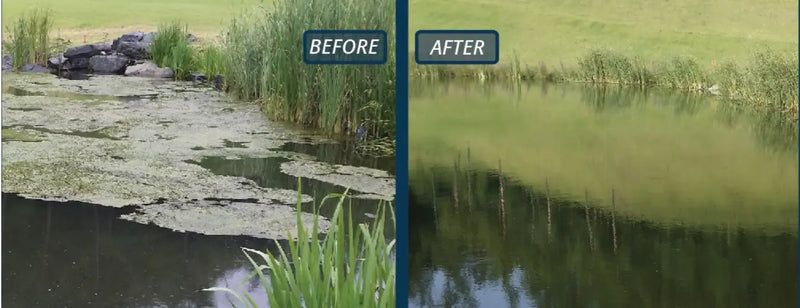
A healthy pond needs more than clean-looking water. A good aeration system keeps oxygen moving through the water column, reduces stagnant areas, helps manage odors, and creates better conditions for fish and beneficial aquatic life. Pond aerators keep your pond “young”. Decreasing much (organic soft sediment) accumulation and greatly improving water quality.
But choosing an aeration system isn't as simple as buying the biggest compressor or the most attractive fountain. Pond depth, surface area, fish load, pond shape, and available electricity all affect which system makes sense. In particular, deeper ponds generally benefit from bottom-diffused aeration, which circulates water from the bottom toward the surface rather than simply agitating the water at the top.
With that in mind, here are five pond aeration systems worth considering in 2026.
AUTHORS NOTE: Many diffused aeration systems are custom designed to fit YOUR POND. There are many kits on the market and they may be perfect for your pond. Alas - your pond is different from mine, the unique characteristics of your waterbody can have a large impact on which system is right for you. Please consult with a pond professional to see if your pond needs a custom setup.
1. Kasco Robust-Aire — Best Overall for Deep Ponds

The Kasco Robust-Aire is a strong all-around choice for pond owners who want effective, bottom-up aeration.
Unlike a decorative fountain, Robust-Aire is a diffused-aeration system. A shore-mounted compressor sends air through weighted tubing to diffusers positioned near the pond bottom. Rising bubbles create circulation that brings deeper, oxygen-poor water toward the surface.
Kasco offers Robust-Aire systems in a range of configurations, making the line suitable for everything from smaller ponds to larger water-management applications. The company specifically positions its diffused systems for bottom-of-pond aeration, alongside its separate surface-aerator products.
Best for: Deep ponds, fishing ponds, and owners prioritizing water quality over fountain aesthetics.
Pros
-
Excellent whole-water-column circulation
-
Well suited to deeper ponds (8+ ft depth)
-
Multiple system sizes and diffuser configurations
-
Designed for continuous aeration
-
Premium brand with 60+ years of experience
Cons
-
Requires installation of airline and bottom diffusers
-
Not the choice if your primary goal is a decorative spray
-
Not as effective for ponds under 8ft of depth
Bottom line: If you want one versatile aeration approach for a deeper pond, Robust-Aire is an excellent place to start.
2. Easy Pro Sentinel Diffused Aeration — Best Value

The Easy Pro Air kits stand out for pond owners looking for a balance between price, and performance.
A current 2026 comparison lists the Sentinel 3 at about 3.9 CFM, with a maximum recommended depth of 30 feet and coverage of roughly a quarter acre. Recent improvements in compressor design (the Sound Shield Rocking Piston Compressor) and cabinet construction, elevates these systems to compete with any on the marketplace.
Because it is a bottom-diffused system, the Sentinel Systems are particularly useful when the objective is to circulate the pond rather than simply create surface movement.
Best for: Small-to-medium ponds where value and operating efficiency matter.
Pros
-
Good performance for the price
-
Recent updates increasing value
-
Bottom-diffused aeration
-
Weather-protective steel enclosures
Cons
-
Diffuser design - Bladder style diffusers are inefficient compared to fine bubble diffusers
-
Less visually impressive than a fountain
-
Compressor cabinets are good - Kasco’s are better (and more expensive)
Bottom line: For a modest pond owner who wants effective aeration without moving into a larger commercial system, the Sentinel is a compelling value.
3. EasyPro PA6SWN/PA8SWN — Best for Small, Shallow Ponds

Smaller ponds don't necessarily need a large compressor. In fact, oversizing an aeration system can add unnecessary cost and energy consumption.
The EasyPro PA6SWN and PA8SWN Shallow Pond Aerator is designed specifically for smaller, shallower ponds. A 2026 pond-aerator guide recommends it for ponds under roughly 1/4 to 1/2 acre and depths below about 7 feet, describing it as an energy-efficient system with one to two diffusers and linear diaphragm compressor.
That's an attractive combination for homeowners with a small fishing pond, garden pond, or similar water feature that needs consistent circulation without a large installation.
Best for: Small residential ponds, shallow ponds, large koi ponds and beach areas and lagoons benefit from this style system as well.
Pros
-
Compact system
-
Energy efficient
-
Designed for shallow water
-
Quiet operation
-
Relatively straightforward installation
-
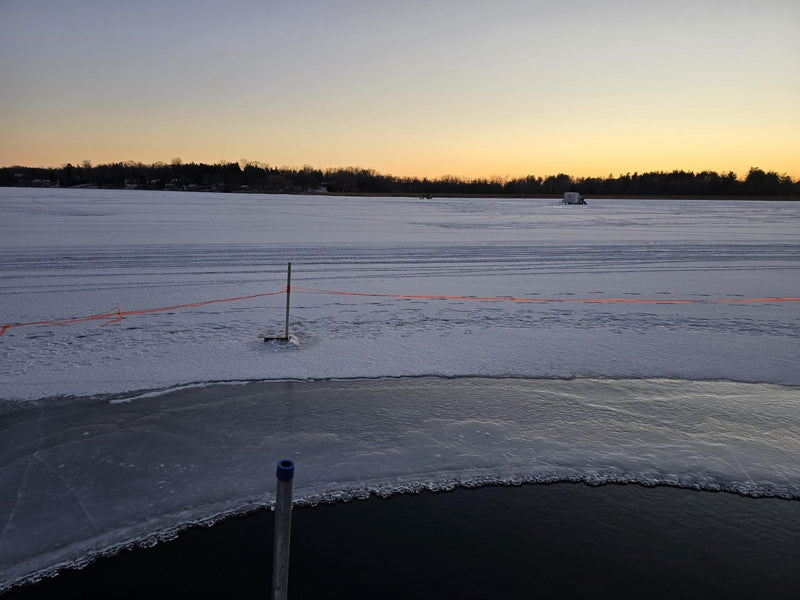
Has capacity as a dock deicing system
Cons
-
Limited compared with systems designed for larger or deeper ponds
-
Not the best choice for a large fish pond
Bottom line: If your pond is small and shallow, a properly sized system like the PA6SWN can make more sense than paying for capacity you don't need.
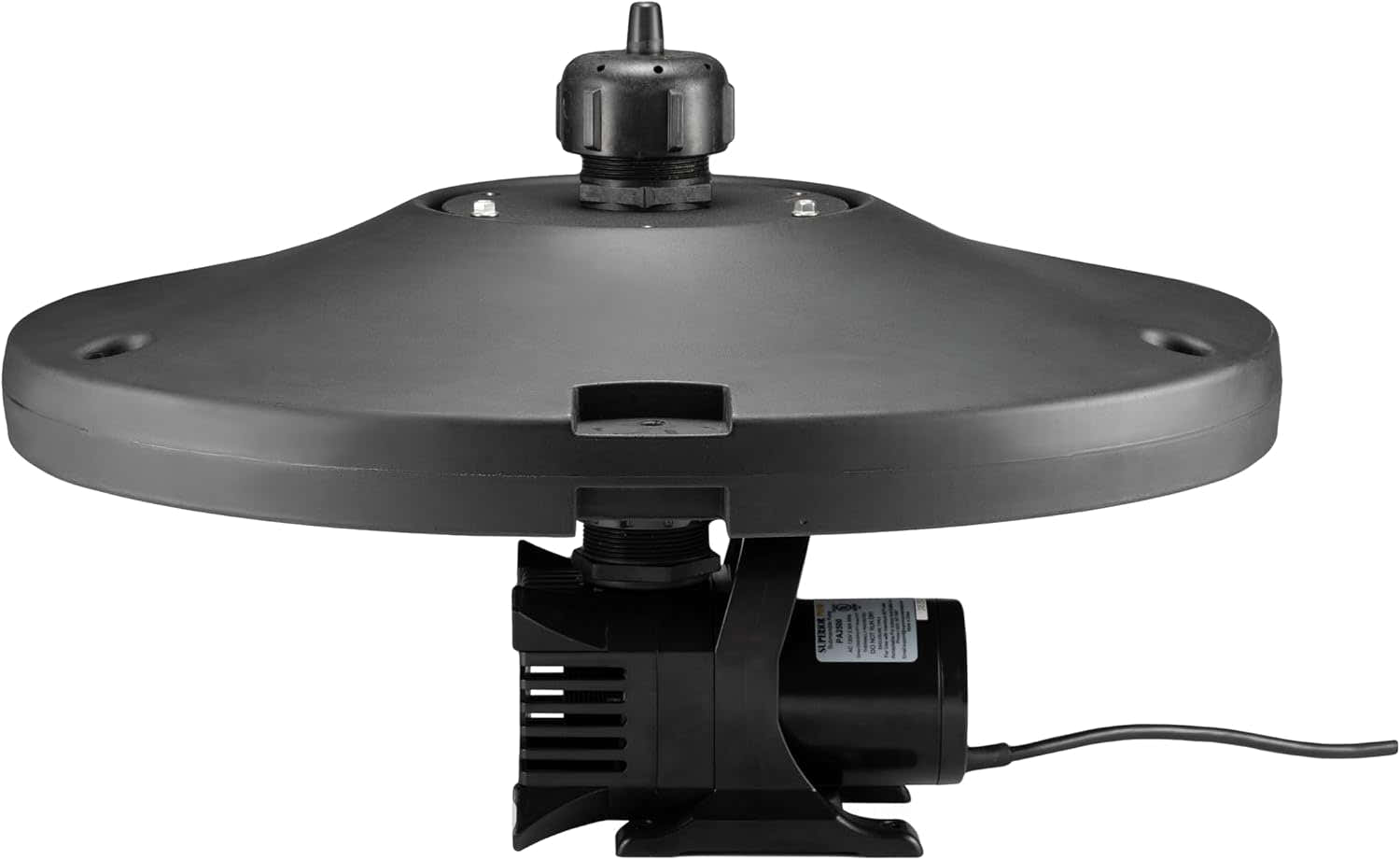
4. Scott Aerator DA-20 — Best Surface Aerator / Aerating Fountain
If you want aeration and an attractive water display, consider the Scott Aerator DA-20.
Scott Aerator is a family-owned company that stands by its product 100%.
The DA-20 is a surface aerator rather than a bottom-diffuser system. It creates substantial surface-water movement, increasing contact between water and atmospheric oxygen and giving the pond a more dynamic appearance.
A 2026 comparison lists the DA-20 at 0.5 HP, with approximately 400 gallons per minute of pumping capacity and a 6.5-foot-high by 22-foot-diameter pattern. Scott Aerator also emphasizes the role of water movement in facilitating oxygen exchange throughout a pond.
LED lighting kits are great for these units.
Best for: Shallow ponds where visible water movement and aesthetics are important.
Pros
-
Attractive surface display
-
Strong visible water movement
-
Adds oxygen while improving pond appearance
-
Simple concept with no submerged diffuser stations
-
5-year warranty
-
115V or 230V Available - Solar-powered units available too (though pricey $$$)
-
Many horsepower and cable lengths available to fit most situations
-
Designed for continuous (24/7) operation
Cons
-
Uses more electricity than many small diffused systems
-
Less appropriate for deeply stratified ponds
-
Surface aeration doesn't provide the same bottom-up circulation as a diffuser-driven aeration kit
-
No timers or control panel as standard equipment
Bottom line: Choose the DA-20 when you want your aerator to double as a visual feature—not just a piece of water-management equipment.
5. Kasco VFX Aerating Fountain — Best for Large, Attractive Ponds

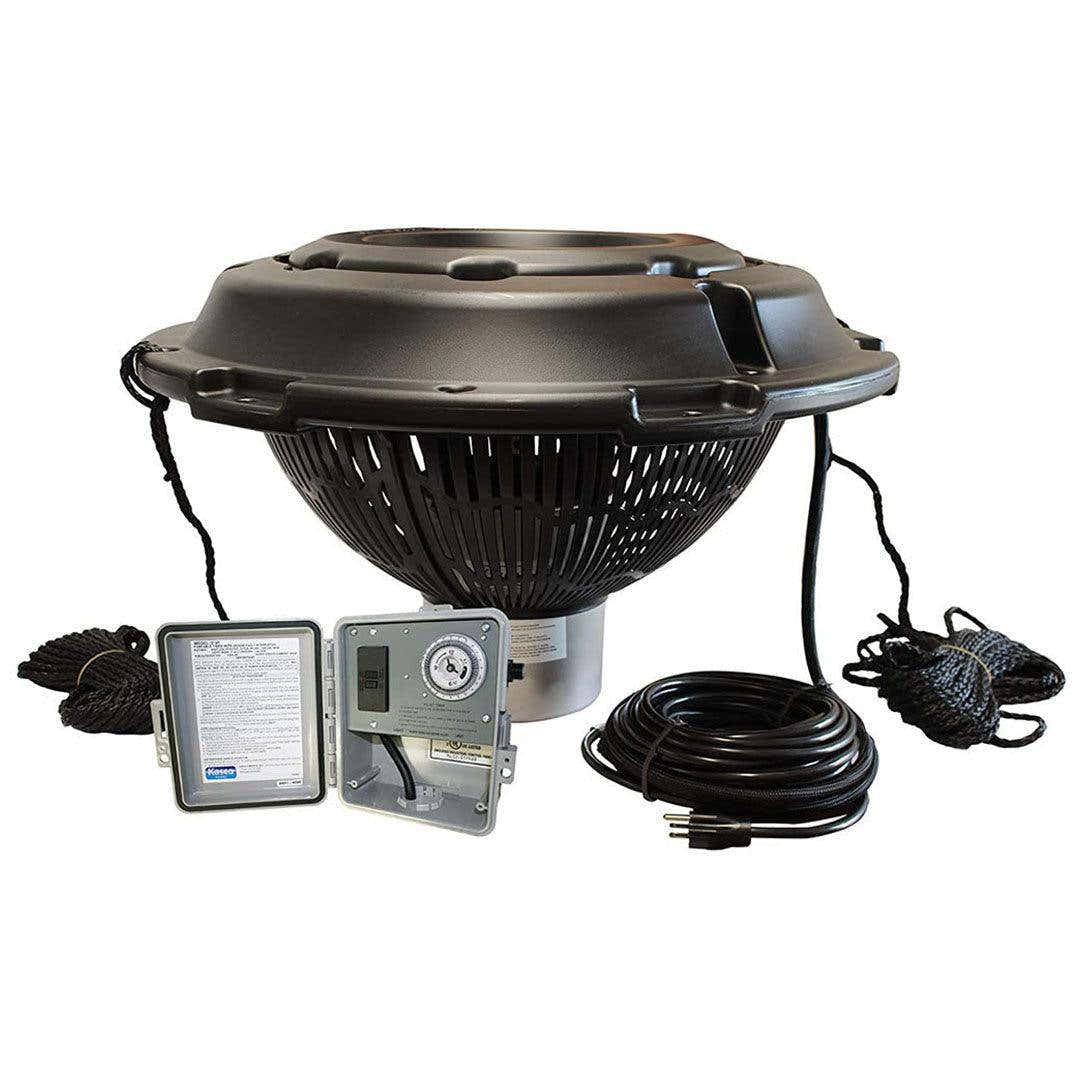
For pond owners who don't want to choose between water quality and appearance, the Kasco VFX Aerating Fountain is worth a look.
The VFX combines fountain aesthetics with substantial water movement. Current product information shows models ranging from 1/2 HP to 5 HP, with water-flow capacity increasing substantially as horsepower rises.
It's particularly attractive for larger residential properties, commercial ponds, HOAs, and other settings where the pond is part of the landscape.
Kasco describes its surface aerators as tools for mixing and moving water at the surface, helping with oxygen exchange and reducing stagnant conditions. Kasco is an excellent company, having been making fountains for 60+ years.
Best for: Larger ponds where appearance is nearly as important as aeration.
Pros
-
Attractive fountain display
-
Significant water movement
-
Available in multiple power levels and cord lengths
-
Combines aeration with landscape appeal
-
Clean, full pattern for excellent performance
Cons
-
Higher purchase and operating costs at larger sizes
-
Not a substitute for a properly sized bottom-diffused system in every deep pond
-
Requires appropriate electrical service
-
240V units are decidedly more expensive than their 115V counterparts
Bottom line: If your pond is a centerpiece of the property, the VFX provides a strong combination of visual appeal and functional aeration.
How to Choose the Right Pond Aerator
Before buying, take three measurements: the pond's surface area, average depth, and total water volume. Depth is especially important because a shallow pond and a deep pond of the same surface area can require very different aeration strategies.
As a general rule:
-
Small, shallow ponds: Consider a compact diffused system or small fountain
-
Deep ponds: Bottom-diffused aeration is generally the better choice for circulating the full water column.
-
Ponds where appearance matters: A surface aerator or aerating fountain may be preferable.
-
Ponds with lots of fish: Plan for greater oxygen demand and size the system accordingly.
-
Irregular-shaped ponds: Multiple diffuser stations may be necessary to prevent poorly circulated areas.
-
Impoundments: Dammed ponds, or ponds with large areas of both deep and shallow water, may need both aeration styles to properly circulate the entire waterbody.
-
Diffusers for the deep end
-
Fountain or Surface Aerator for the shallow side.
-
It's also important to consider backpressure when sizing a diffused system. A compressor's published airflow isn't necessarily the airflow you'll get at the bottom of a deep pond; greater depth increases the pressure the compressor must overcome.
What About Solar Pond Aeration?
Solar aeration can be a smart solution when running electrical service to the pond isn't practical. Solar systems eliminate the need for a conventional electrical connection, although output depends on sunlight and system design.
If the pond contains valuable fish, however, don't choose a solar unit simply because it's convenient. Make sure the system can provide adequate aeration under the conditions your pond actually experiences.
Diffused aeration systems can pump air to ponds 1000+ feet away. Just because power isn't run down to the pond doesn't mean you can’t have a good aerator.
These systems are called “remote” aeration systems. Please reach out to me or your pond pro for more details, as these systems are always custom designed for your unique needs.
Final Verdict
There's no single "best" pond aerator for every pond.
For deep ponds and overall water circulation, the Kasco Robust-Aire is one of the strongest choices. In terms of value, Easy Pro’s Sentinel kits deserve attention. For small, shallow ponds, the EasyPro PA6SWN is a practical option. If surface display and aesthetics are priorities, the Scott Aerator DA-20 and Kasco VFX are compelling choices.
Most importantly, size the aerator to your pond rather than buying based solely on horsepower or price. A correctly sized system will do more for pond health—and typically operate more efficiently—than an oversized or undersized unit.
Product specifications, availability, and recommended pond capacities can change, so verify the manufacturer's current specifications before purchasing.
Popular with pond owners



Scott Aerator
115 Volt | Aquasweep | Dock Mount | Water Circulator | Muck Blaster
Kasco Marine
120V | VFX Series | Aerating Water Fountain | 1/2HP | 3/4HP | 1HP Rated 5.0 out of 5(5)
Not sure what your pond needs?
Take the 1-minute pond quiz
Answer a few quick questions and get a plan made for your pond, with the products that fit it.