


Table of contents
No headings found in this article.
Every spring we get the same phone call. The ice goes out, the pond owner walks down to the shoreline, and there they are: the bass, the bluegill, the catfish they've been feeding for three years. Belly up.
The first thing people say is, "It was too cold." It almost never is. Fish handle cold water just fine. What they can't handle is running out of oxygen or the build up of bad gasses (CH4, CO2, NH3, SO2, etc) that can be released from bottom sediments under an ice cap. The long Midwestern winter has plenty of opportunities to inflict these conditions on your pond or lake.
This situation commonly happens in older ponds or ponds that have a large watershed where the accumulation of organic soft sediment reaches a critical threshold. Nearby agriculture can be a large contributor of nutrient laden silt/runoff. These accumulated organic compounds can be toxic to fish in large or sudden doses.
This happened to one of my clients in southern WI, their pond (about ⅓ acre in size) was generally incident free for years and years. Then, the farm up the road decided to spread manure on a field over frozen ground. A slight warmup followed and a day of rain washed that big pile of manure down hill to my clients ice capped pond. The influx of nutrients and the oxygen depleting organics contained in that run off depleted and poisoned the pond. Very few fish survived…
Bad luck, odd weather, and poor waste management timing lead to this ecological dumpster fire, most winterkills are not caused by a single event, but slow accumulation over time and the steady depletion of oxygen under the ice..
The good news: winterkill is one of the most preventable problems in pond management. You just need to know whether your pond needs a de-icer, an aerator, or both. (Spoiler: they are not the same thing, no matter what the guy at the farm store told you.)
Why Fish Die Under the Ice (It's Not the Cold)
In summer, your pond makes its own oxygen. Algae and plants photosynthesize, wind mixes the surface, and oxygen moves in from the air. Winter shuts all three down:
-
Ice seals the lid. No wind, no mixing, and far less gas exchange with the air.
-
Snow turns off the lights. A few inches of snow on the ice blocks sunlight, so plants and algae stop producing oxygen.
-
The bottom keeps eating. Dead leaves, weeds, and muck keep decomposing all winter, and decomposition uses up oxygen.
When dissolved oxygen falls to around 2 ppm, fish start dying. Shallow ponds and weedy ponds get there fastest, because they have less water to start with and more rotting material on the bottom.
The worst part is you usually won't know until spring. One warning sign: if you cut a hole in the ice and smell rotten eggs, oxygen is already very low.
De-Icer vs. Aerator: What Each One Actually Does
This is where most of the confusion comes from, so let's clear it up.
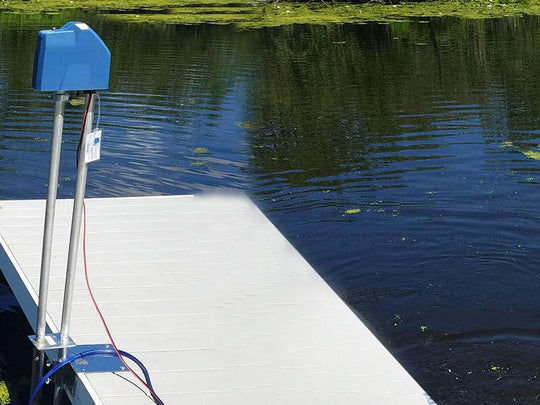
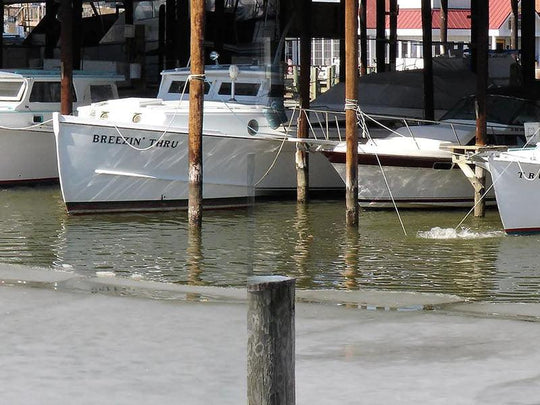
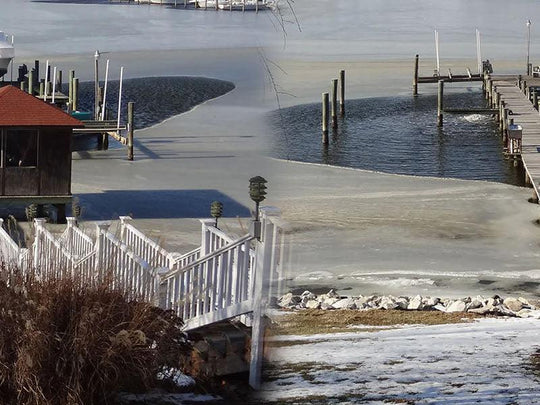
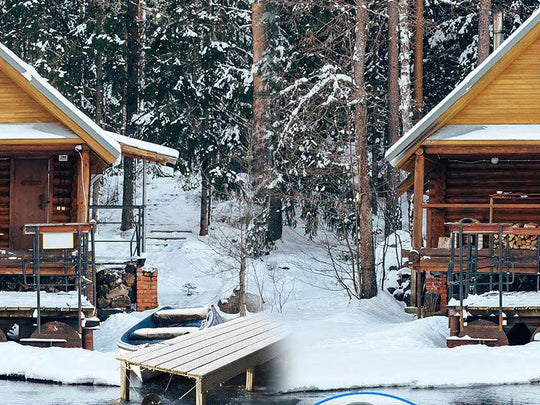
A de-icer keeps an area of water open by moving warmer water from below up to the surface. Its main job is protecting docks, boat lifts, and seawalls from ice damage. The open hole helps with gas exchange, but a de-icer isn't designed to oxygenate a whole pond. Though in some circumstances, it can do just that.
 An aerator (usually a bottom diffuser fed by a compressor on shore) pumps air into the pond and keeps water circulating. Its job is oxygen. The rising bubbles also tend to keep a hole open above the diffuser, which is a nice bonus. In winter, the hole is important to let oxygen in and bad gases out, this can be critical in old ponds with a heavy fish load.
 Bottom line: De-icers protect your stuff. Aerators protect your fish. If you want to do both, you need to think about both.
Which One Does Your Pond Need?
Backyard pond or small farm pond with fish, no dock: An aerator. This is the one that keeps your fish breathing.
What kind of aerator do you need? Well, that depends on your pond. How deep is it? What shape? How many acres?
For more on this subject please read:
3 Types of pond aeration: Which is best for your pond?
Lake or pond with a dock or boat lift: A de-icer at the dock. Our most popular by a mile is the Kasco Marine Dock De-Icer, in 120V or 240V. There's a reason Midwest dock owners keep coming back for them. We also carry the Scott Aerator Slinger Dock De-Icer or the Scott Floating De-Icer. Add an aerator if you have fish you care about.
Pro tip: Pair your de-icer with a Kasco thermostat controller or Superior Pond Thermostat controller . It only runs the de-icer when the water gets close to freezing, so you're not paying to spin a propeller on a 45-degree day in November. Your electric bill will thank you. Browse all of our dock de-icers here.
Shallow, weedy pond that's had a winterkill before: Aeration, no question. Prevention is cheaper than restocking. (Restocking is pricey $$$. So is explaining to the kids where the fish went.)
Already running an aerator all summer? Great. Don't shut it off in the fall. Move it (see below) and keep it running.
Setting Up Aeration for Winter
Winter aeration works a little differently than summer aeration. In summer you want to mix the whole pond. In winter, the warmest water (around 39°F) sinks to the bottom, and that's where your fish spend the season. You don't want to churn that pocket up and chill it.
 Winter setup at a glance: de-icer at the dock, diffuser at about half the pond's max depth, and the fish down in the warmest water on the bottom.
-
Move your diffusers shallower. A common rule of thumb is about half of your pond's maximum depth. That keeps a hole open and moves oxygen without mixing the warm bottom layer.
-
Keep it running all winter. Turning it on and off lets the hole freeze over and wastes the effort.
-
Set it up before the pond freezes. Moving diffusers through a foot of ice is a project nobody enjoys.
-
Mark the open water. Aeration holes and the ice around them are thin and unpredictable. Put up a sign or a flag, and keep kids, dogs, and ice fishermen away from them.
-
If you can, move the diffuser near to shore so than the open water will be contiguous with the shoreline. This will make it easier for critters who may fall in to climb out of the water. There are not many things more gross than having to fish out a turkey that’s half frozen and yet, still gooey…
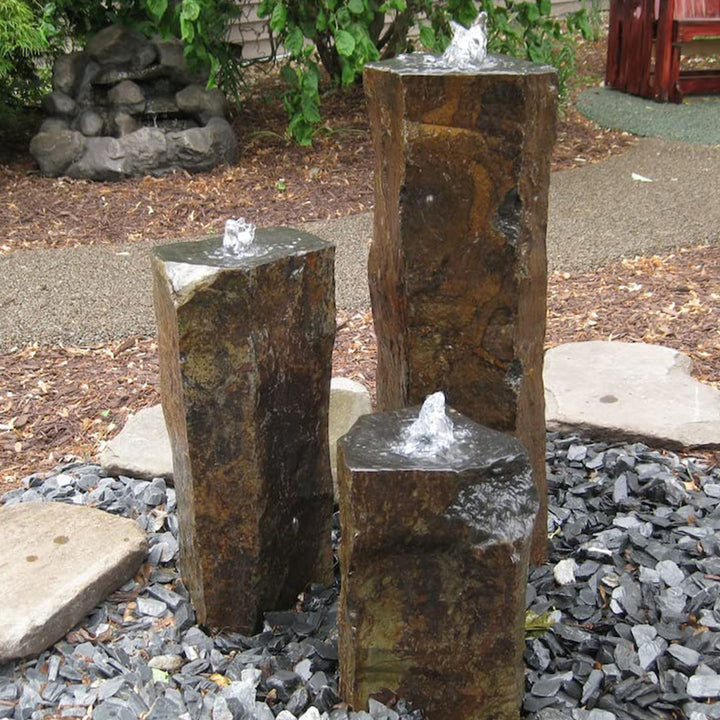
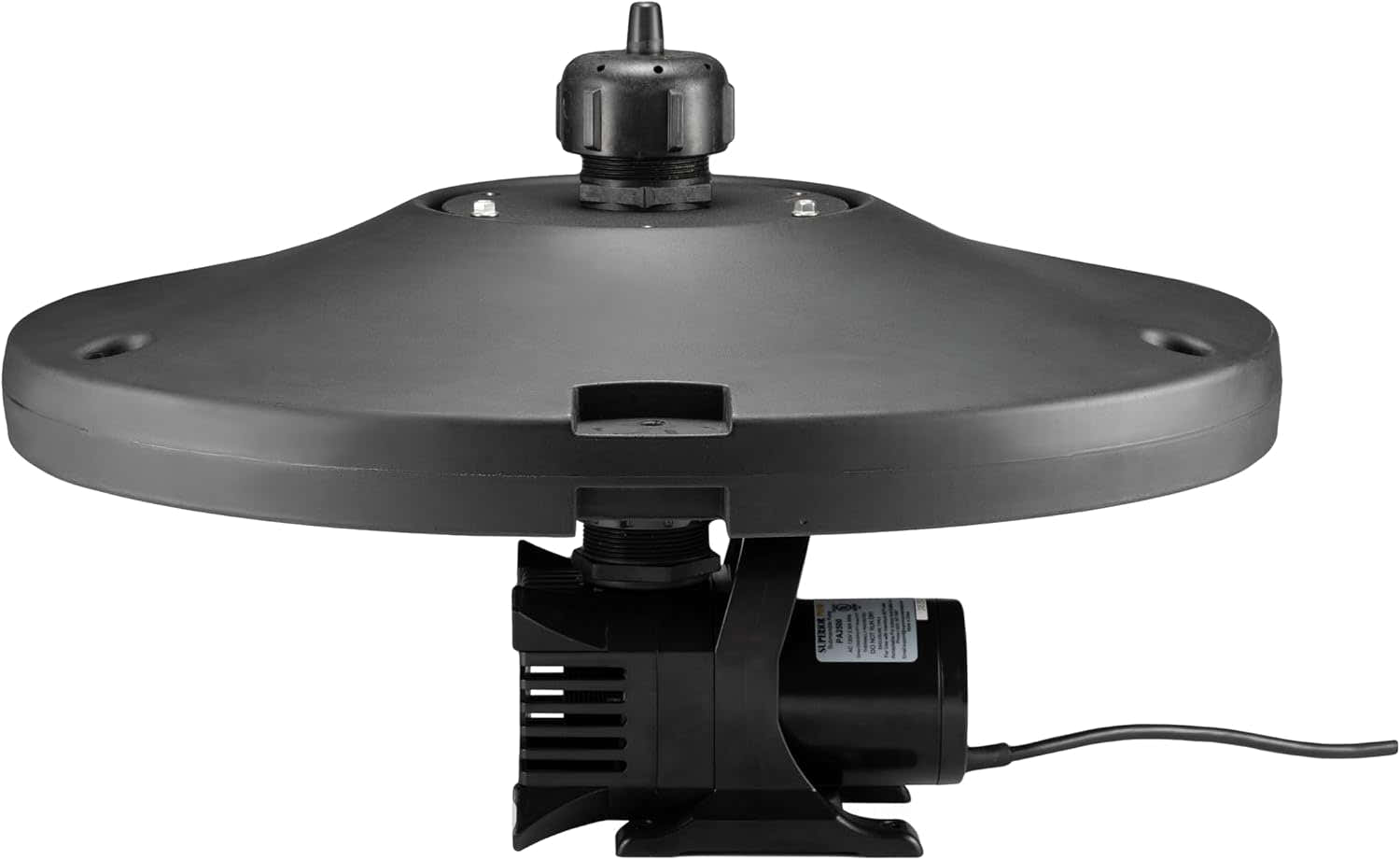
Fountains / Surface Aerators: Decorative fountains and floating aerators that spray water into the air generally aren't meant to run through a Midwest winter. Spray freezes into ice sculptures on the unit, and the spray chills the water. Most owners pull them before the first hard freeze and reinstall in spring.
There is a single fountain manufacturer that advises folks to leave their units in the water. Scott Aerator has crush proof floats and should remain in the pond to freeze in. This does not mean they should be run through the winter. Simply unplug SCOTT FOUNTAINS ONLY and allow the ice to lock them in for the winter.
All other floating equipment should be removed and stored for the winter. There are exceptions to this: namely if you live far enough south where thick ice isn’t an issue, but please be cautious, new floats are expensive, and retrieving fountains from the bottom isn't a lot of fun.
What Not to Do
-
Don't pound a hole in the ice. The shock waves travel through the water and stress fish that are already running low on energy. If you need to reopen a hole, pour hot water on it instead or use an ice auger.
-
Don't use salt or chemicals to melt ice. Anything that melts ice on your driveway doesn't belong in your pond.
-
Don't walk on ice to clear snow unless it's safe. Clearing snow off part of the pond helps sunlight reach the plants, but only if the ice is thick enough to hold you. No fish is worth going through the ice.
Bottom Line
Your fish don't need a heater. They need to breathe. A de-icer protects your dock, an aerator protects your fish, and plenty of ponds need both. Get it set up before the ice comes, and next spring the only thing floating should be the leaves.
Not sure what your pond needs? Give us a call at (833) 779-2837 or email sales@midwestponds.com. Tell us your pond's size, depth, and whether you have a dock, and we'll point you to the right setup.
Popular with pond owners



Scott Aerator
115 Volt | Aquasweep | Dock Mount | Water Circulator | Muck Blaster
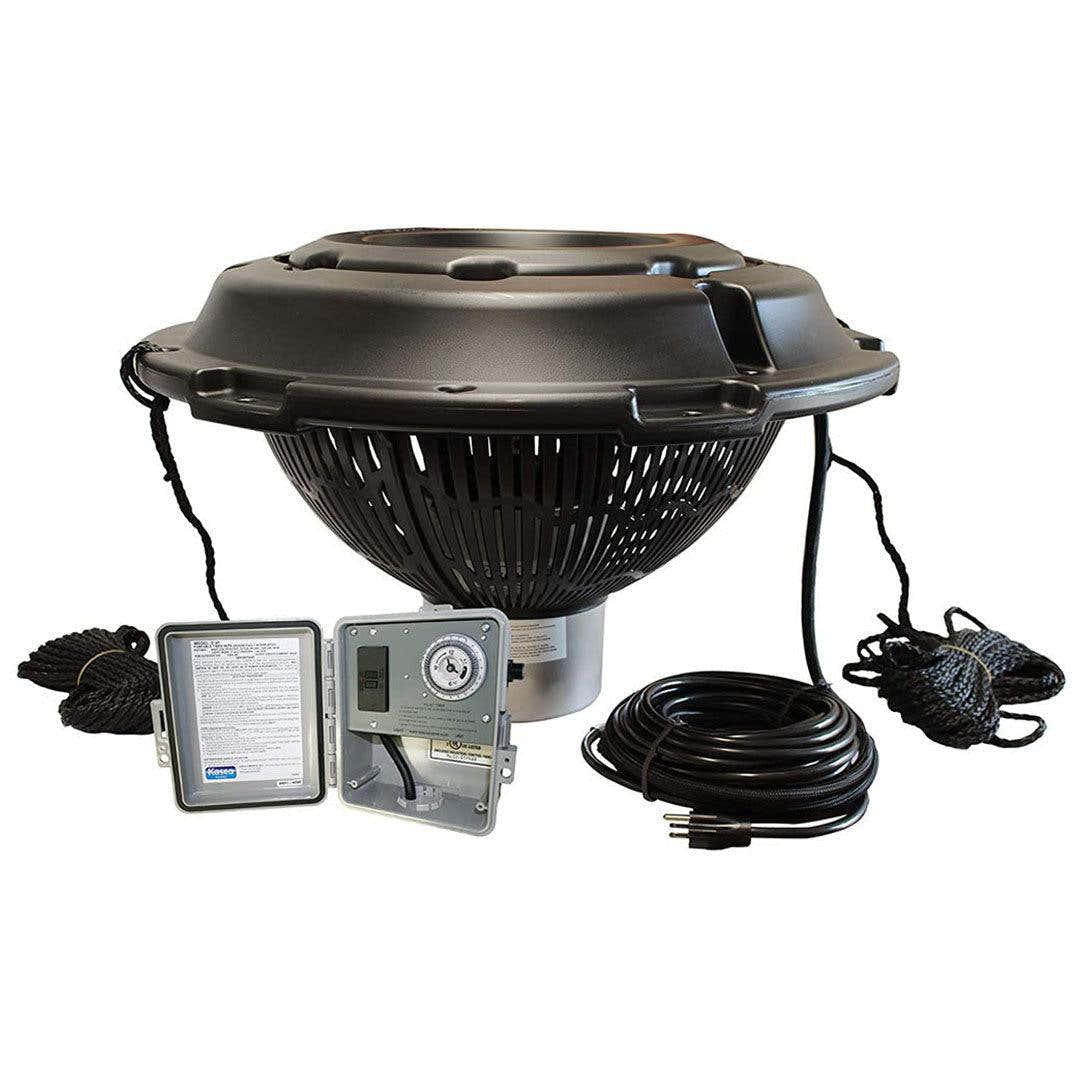
Kasco Marine
120V | VFX Series | Aerating Water Fountain | 1/2HP | 3/4HP | 1HP Rated 5.0 out of 5(5)
Not sure what your pond needs?
Take the 1-minute pond quiz
Answer a few quick questions and get a plan made for your pond, with the products that fit it.